Ear piercing types › Helix
Helix Piercing
Try a helix piercing on the planner →
What is a helix piercing?
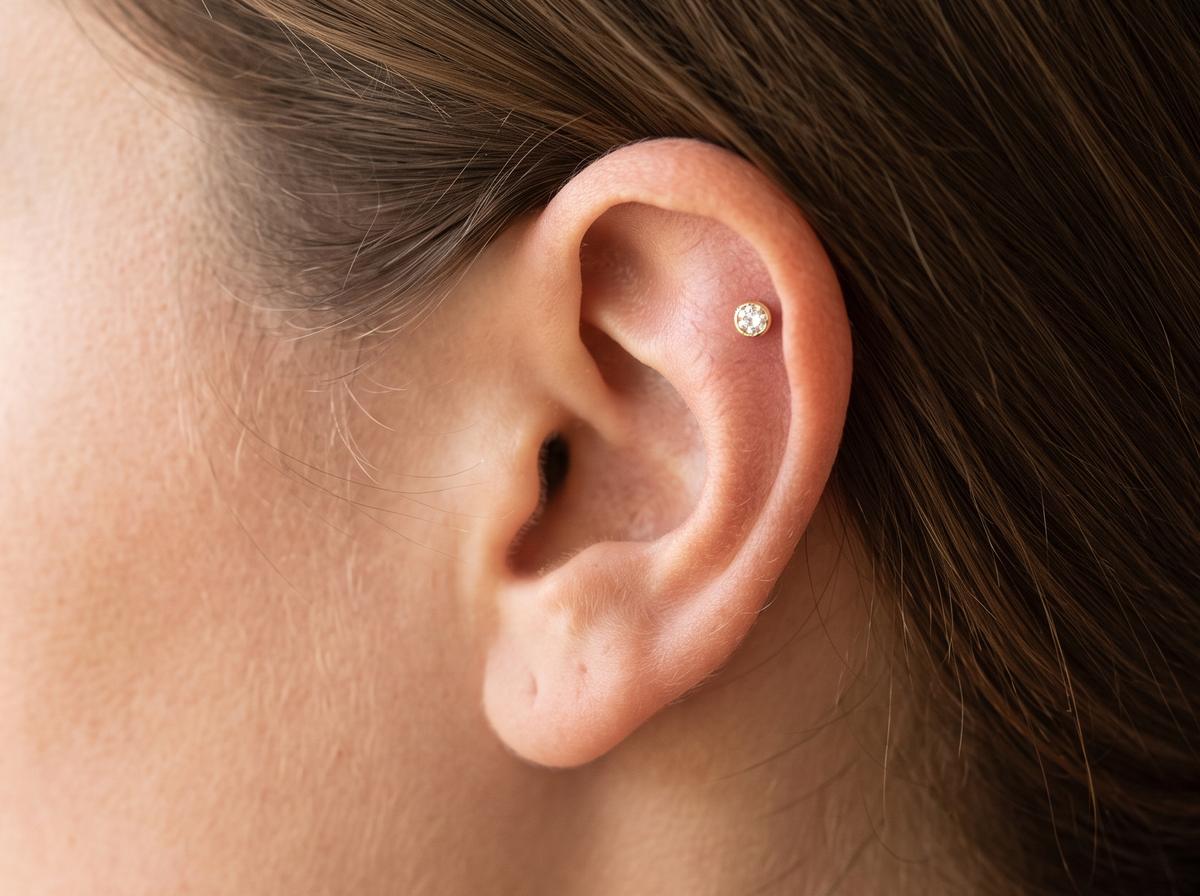
A helix piercing goes through the outer upper rim of the ear — the curved band of cartilage that runs from the top of the ear down toward the lobe. It is the most popular cartilage piercing and often the first one people get after their lobes. You can wear one, or stack two or three along the rim for a double or triple helix.
Does a helix piercing hurt?
Most people describe a helix as a quick, sharp pinch followed by a warm ache, around 4–5 out of 10. It is usually easier than the thicker inner cartilage spots like the rook or snug. The tenderness that lingers for a few days is often more noticeable than the needle itself. See how it compares with every other spot in the ear piercing pain chart.
Helix piercing healing time and aftercare
Expect roughly 6–12 months for full healing, even if it looks fine after a few weeks. The biggest problem for helix piercings is pressure: sleeping on that side, hats, headphones and hair catching on the jewelry. A travel pillow (sleeping with your ear in the hole) helps a lot. Clean with sterile saline, don't twist the jewelry, and let your piercer downsize the post once the initial swelling is gone.
Helix piercing jewelry and size
Start with a flat-back labret stud, usually 16g (1.2 mm). Hoops look great on the helix but are best saved until the piercing is fully healed, because a ring moves more and can irritate a fresh piercing. Once healed, popular choices are small seamless hoops, huggies, tiny gem clusters and chain-connected studs.
Typical starting gauge: 16g (1.2 mm). Common jewelry: Flat-back labret, hoop after healing.
Who can get a helix piercing?
Almost everyone has enough rim for a helix. If your rim is very thin or folded, your piercer may place it slightly lower. A double or triple helix needs enough vertical space for the studs not to crowd each other.
What to pair it with
The helix pairs naturally with a lobe stack (first and second lobe) for a simple balanced look, or with a forward helix and flat piercing for a "constellation" of small studs across the upper ear. You can test combinations in the ear piercing planner and save the result to show your piercer, or browse curated ear ideas for ready-made looks.
Helix vs. lobe piercing: cartilage vs. soft tissue
A helix is a cartilage piercing; the lobe is soft tissue — and the difference shows up at every step. Pain: a helix is usually rated 4–5 out of 10, versus 1–2 for a lobe. Healing: the Association of Professional Piercers publishes 6–9 months or longer for ear cartilage — many piercers say up to a year — against 6–8 weeks or longer for an earlobe. Jewelry: a helix starts with a 16g flat-back stud, and hoops are best saved until it's fully healed, while a lobe starts at 20g–18g and can wear almost any earring once healed. Care: cartilage punishes pressure — sleeping on that side, hats and headphones are the main things to manage — while a fresh lobe mostly needs saline and patience. In short: the lobe is the easy first piercing; the helix is the classic second step if you want rim jewelry and can commit to a longer healing window. Compare every placement in the ear piercing pain chart, or try both on the planner.
Helix piercing FAQ
How long does a helix piercing take to heal?
A helix piercing usually takes 6–12 months to heal fully. It can look healed after a few weeks, but cartilage keeps healing on the inside for much longer.
Can I sleep on my helix piercing?
No — avoid sleeping on it until it is fully healed. Pressure from a pillow is one of the most common causes of irritation bumps; a travel pillow lets you keep your side-sleeping position without pressing on the ear.
Can I get a hoop in a new helix piercing?
Not at first — start with a flat-back stud and switch to a hoop only after full healing. A hoop moves more than a stud and can irritate a fresh piercing and slow healing.
How much does a helix piercing hurt?
Most people rate a helix piercing 4–5 out of 10 — a quick, sharp pinch followed by a warm ache. It is usually easier than the thicker inner-cartilage spots like the rook or snug.
What gauge is a helix piercing?
Helix piercings are usually done at 16g (1.2 mm). That is the standard starting thickness for most outer-cartilage piercings.
How do I clean a new helix piercing?
Clean it once or twice a day with sterile saline — spray it on, let it run over the piercing, then gently pat dry. Don't twist the jewelry, don't pick at crusties, and keep hair products away while it heals.
When can I change my helix jewelry?
Wait until it is fully healed — usually 6–12 months — and ideally let your piercer do the first change. Cartilage holes shrink fast, and forcing jewelry in yourself can irritate a nearly healed piercing.
Can I get two helix piercings at once?
Yes — a double helix (two holes in the same session) is common if your rim has enough space. Many piercers prefer to do them together so they heal on the same timeline.
Can I swim with a healing helix piercing?
It is best to avoid pools, hot tubs and natural water while a helix is healing — and cartilage heals slowly, so that means months, not weeks. If you do swim, rinse with sterile saline afterwards.
Will my helix piercing close if I take the jewelry out?
Yes, probably — a helix can start shrinking within hours once the jewelry is out, especially in the first year. Keep jewelry in at all times during healing, and even later never leave a cartilage piercing empty for long.
Pain is a commonly reported range and varies by person. Healing times follow general guidance from the Association of Professional Piercers. This page is general information, not medical advice — always talk to a professional piercer.
Other ear piercings
Forward Helix Flat Rook Daith Tragus Conch Snug Anti-Tragus Auricle Lobe Upper Lobe Industrial